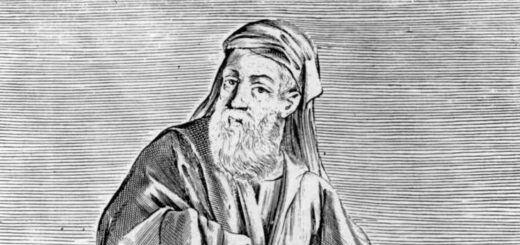
The First Neurobiologist – Alcmaeon of Croton
Alcmaeon of Croton (5th century BCE) is, according to some sources, a disciple of Pythagoras. However, unlike Pythagoras and many other philosophers of his time, his area of interest did not include physics or astronomy. Instead, Alcmaeon chose medicine and considered as the author of the first medical book in history.
Alcmaeon was the first philosopher to explore psychology, physiology, and embryology. He declared that human knowledge is limited by experience, which aligns him with the empiricist school of thought.
Empiricists assert that knowledge is acquired through the sensory organs. In this view, experience forms the foundation of knowledge. According to empiricism, which translates from Greek as “experience,” the human mind is like a blank slate at birth. Over time, through experience, thought develops, and individuals acquire knowledge.
One of the notable proponents of empiricism, English philosopher John Locke, addresses humanity with the following thought: “Let us then suppose the mind to be, as we say, white paper, void of all characters, without any ideas:—How comes it to be furnished? Whence comes it by that vast store which the busy and boundless fancy of man has painted on it with an almost endless variety? Whence has it all the materials of reason and knowledge? To this I answer, in one word, from experience.”
Unlike empiricism, rationalism sees the source of knowledge in reason, while skepticism questions the very possibility of knowledge and objective reality.
More on these later.
Alcmaeon studied anatomy, botany, and zoology, thus laying the foundation for modern biology. He is considered one of the pioneers of anatomical dissection—an operation involving cutting and separating parts of a deceased organism to study its anatomical structure.
Alcmaeon conducted dissections on animals and, possibly, even humans. Through these studies, he discovered the nervous system and its connection to the brain. He concluded that thought and perception originate in the brain, not in the heart, as many philosophers believed at the time. Furthermore, he observed that any alteration to the brain could lead to confusion in senses and thought. Later, this concept was supported and developed by “the father of medicine,” Hippocrates.
Modern science provides the following explanation of the nervous system: it is a complex system that receives stimuli from the environment, regulates the activity of other organs, and ensures appropriate responses. The primary function of the nervous system is to transmit information received from the external environment as signals to the central nervous system, process these signals, and formulate the organism’s necessary response.
As we can see, Alcmaeon reached a similar conclusion. According to his thinking, the senses—such as vision, hearing, and touch—transmit the information they receive to the brain. The brain, in turn, analyzes this information and draws conclusions, which result in thought. For Alcmaeon, thought is what distinguishes humans from animals, as sensory perception is present in both humans and animals alike.
Considered the greatest naturalist and neuroscientist of the ancient world, Alcmaeon was the first to identify the auditory tube. He also wrote about fetal development in the womb.
According to Alcmaeon, the fetus forms from the union of male and female seeds. He attributed the causes of diseases to diet, lifestyle, and the environment, emphasizing that a healthy life depends on the harmony of these three factors. Thus, the harmony that Pythagorean thought observed in nature should also manifest in human life.